
Digital radiography (X-ray)
Digital X-rays show fine detail in bone, so we can find fractures, arthritis, joint problems and other orthopedic issues quickly. We can adjust and magnify the image on the spot, and email copies to you, your farrier or a specialist. A portable unit goes out on farm calls.
Ultrasound
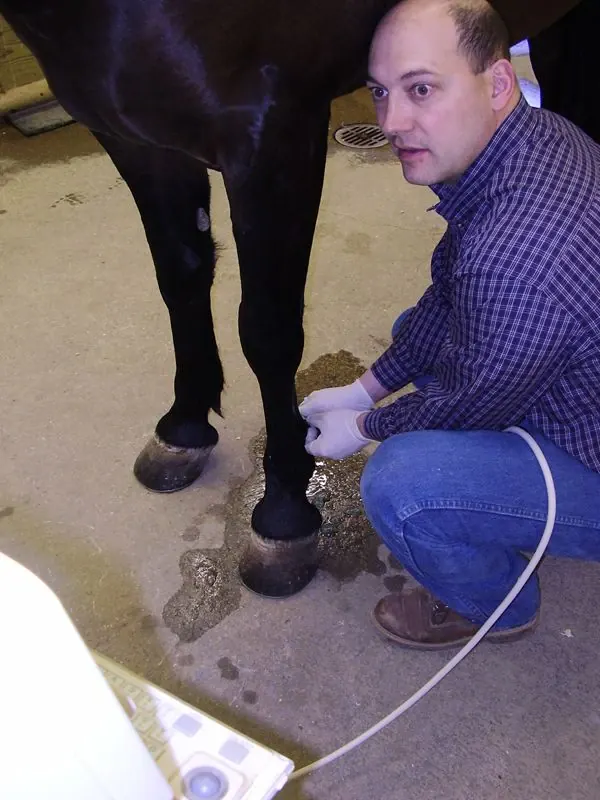
We use ultrasound two main ways. In mares, it shows the ovaries and uterus, so we can time breeding and confirm pregnancy as early as 14 days after breeding.
For injuries, ultrasound shows tendons, ligaments and other soft tissue in detail. It's also how we track healing, so you know when it's safe to bring a horse back into work.
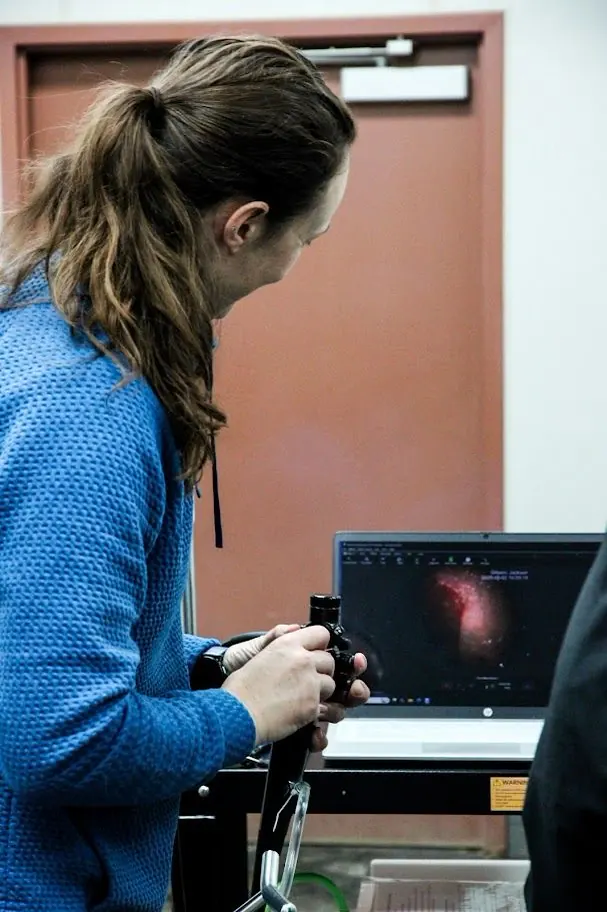
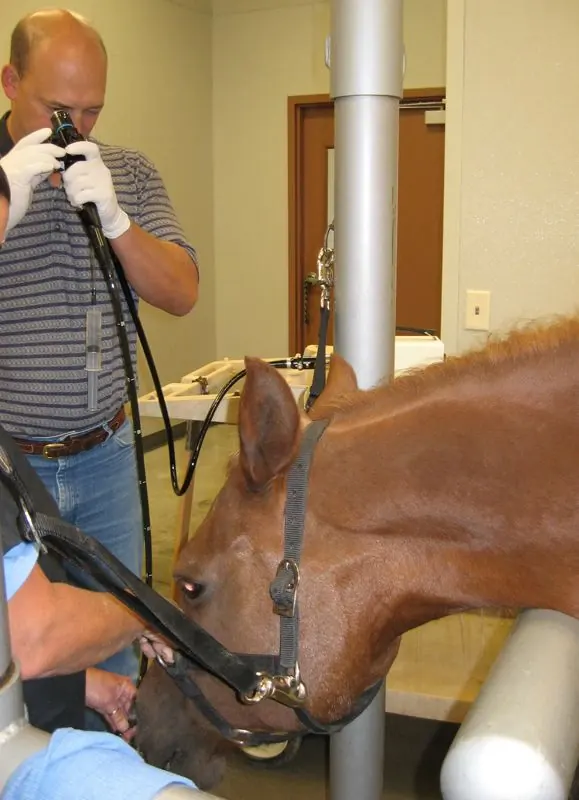
Endoscopy and gastroscopy
A small camera on a flexible scope lets us look directly into the upper airway and trachea, or into the stomach to check for ulcers. It's minimally invasive and we see the results live on a screen.
In-house laboratory
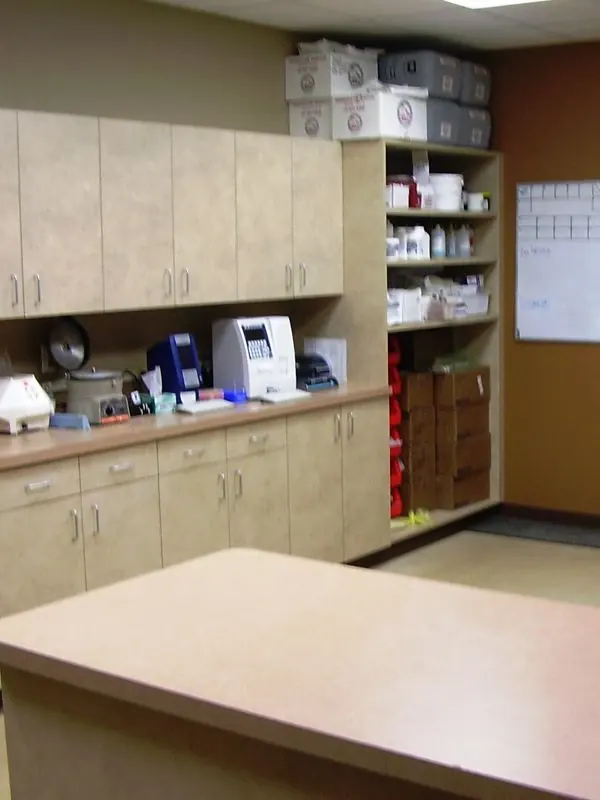
Running tests here means faster answers and faster treatment. Our lab handles:
- Complete blood counts
- Blood chemistry profiles
- Fibrinogen
- Packed cell volume
- Total protein
- Quantitative progesterone
- Fecal exams
- Bacterial cultures
- Semen evaluations
- Foal IgG
- Microscopic exams
EIA (Coggins) lab
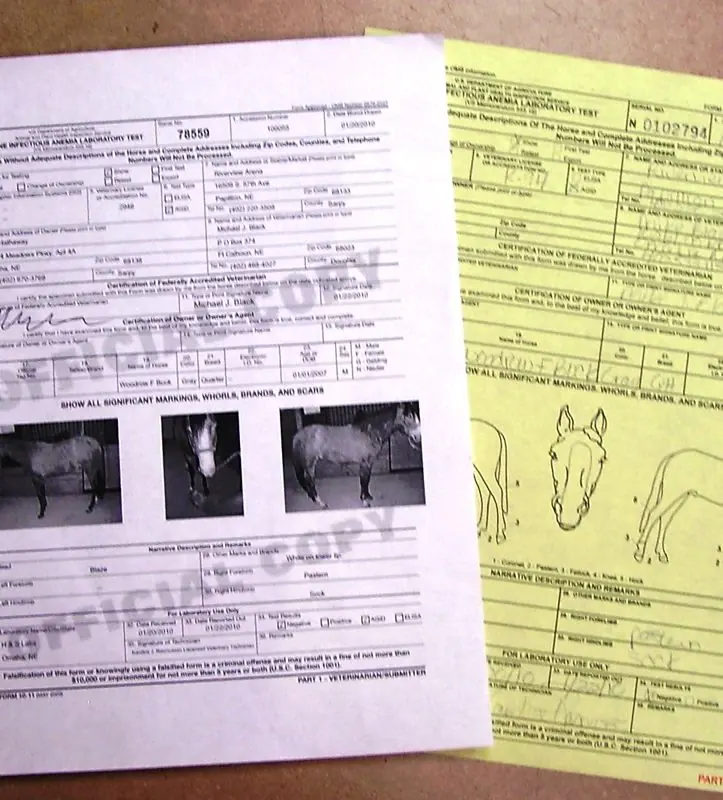
Our federally certified EIA laboratory, H&S Laboratory, runs close to 2,500 Coggins tests a year. We test for our own clients and for several veterinarians in western Iowa and eastern Nebraska.
Coggins results and health certificates (CVIs) are digital, so we can email them to you instead of mailing paper copies.
Traveling with your horse? Equine infectious anemia (EIA) spreads through biting insects and is federally regulated. Most states require a negative Coggins test and a health certificate to cross state lines, and every state's rules differ. Check your destination's rules early, then request your paperwork.